5 Emergency Food Storage Mistakes and How to Fix Them
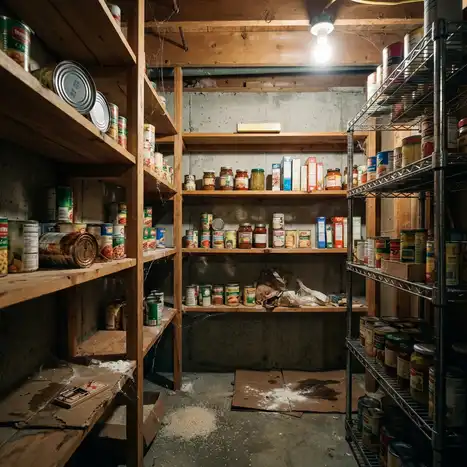
Audit a beginner emergency pantry for unusable food, missing water, unsafe cooking, poor rotation, and fragile storage, then fix each problem in one afternoon.
Meals during outages and disruptions
Begin with familiar foods and the first meals the household would make without grid power. Water, fuel, dietary needs, storage conditions, labeling, and rotation matter as much as the item count.
Recommended starting guide
Build the first pantry layer around actual meals, no-cook options, preparation water, dietary constraints, storage conditions, and rotation.
After the starting guide, use only the steps that match the household decision in front of you.
Use a two-week pattern to expose missing ingredients, substitutions, serving needs, preparation water, and fuel demand.
Read this guideChoose indoor-safe electric options or outdoor combustion equipment with the fuel, ventilation, weather, and fire limits made explicit.
Read this guideCheck rotation, pests, containers, cooking constraints, labeling, and food safety.
Read this guide10 published guides
Check the updated date, sources, assumptions, and safety limits inside each guide before acting.
5 Emergency Food Storage Mistakes and How to Fix Them
Audit a beginner emergency pantry for unusable food, missing water, unsafe cooking, poor rotation, and fragile storage, then fix each problem in one afternoon.
Water Storage Container Guide: Choose, Place, and Dispense Safely

Choose emergency water containers by food-contact suitability, opening, size, weight, durability, placement, and dispensing needs using current CDC guidance.
Winter Storm Grocery List: A 48-Hour Shopping and Meal Plan

Shop for a winter storm without panic buying: audit the pantry, cover three no-cook days, add safe water and low-fuel meals, and protect refrigerated food.
Long-Term Food Storage Methods: Dry Staples, Barriers, and Rotation
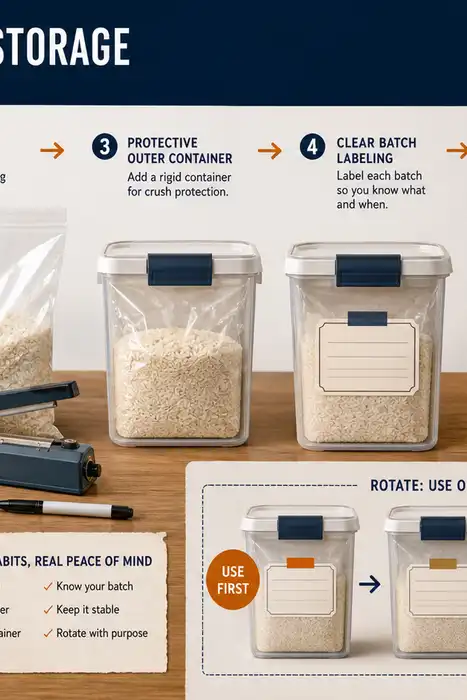
Package dry bulk staples for deeper food storage with suitable foods, food-contact barriers, oxygen-control cautions, labels, small batches, and a rotation plan.
Use these guides after you know the household requirement. Specifications, prices, and availability change, so verify dated details with the manufacturer or seller before buying.
How to Compare Freeze-Dried Meal Brands
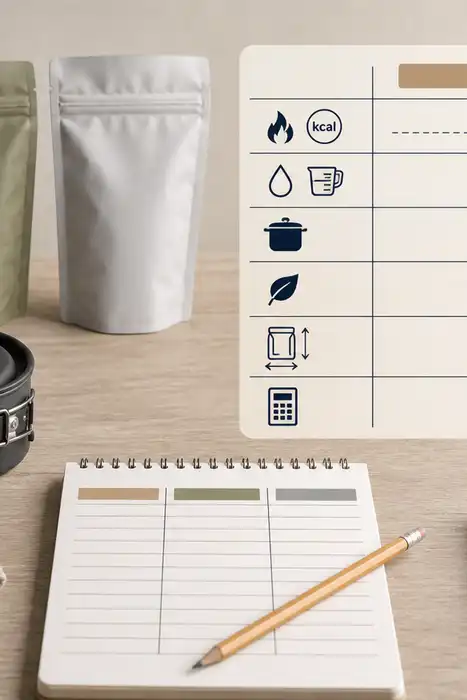
Compare freeze-dried emergency meals by usable portions, water and fuel demand, allergens, sodium, package dates, storage instructions, and household fit.
Start with a short supply you can afford, eat, and rotate. Extend it based on local hazards, household needs, storage space, water, and safe cooking options rather than relying on one universal duration.
Only if you also have safe water, suitable fuel, outdoor equipment where required, and a way to prepare the food under outage conditions. Keep a no-cook layer for the beginning of an emergency.
Shelf life varies by product, packaging, temperature, moisture, pests, and manufacturer guidance. Inspect the supply, use date labels, and rotate it into normal meals.