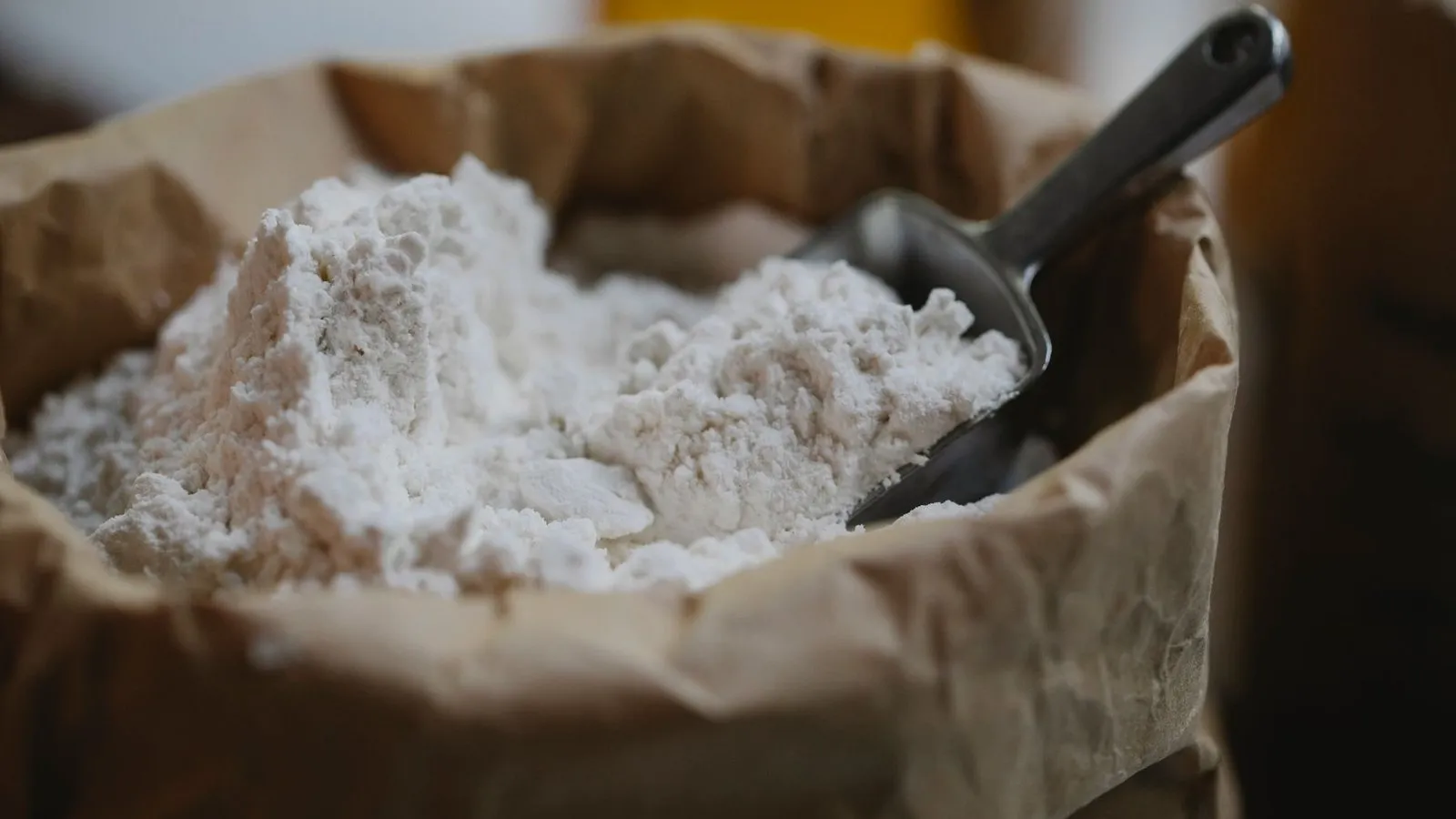
When an opened flour bag will not close neatly, the quick fix is to fold it over or pour it into a canister. Keep the maker and date paired with the flour through that move; you may need them later to check the exact product and its storage directions.
Start with the package directions
Keep the best-by wording and manufacturer with the flour. If you transfer it to another container, cut out the label or copy the product, date, and storage instructions onto a record. A container without its date can turn a useful package cue into a guess.
The two King Arthur packages reviewed for this guide—Organic All-Purpose Flour and Whole Wheat Flour—give the same after-opening instruction: keep the flour cool and dry in a sealed container, and freeze it for prolonged storage. Those labels do not specify how many months “prolonged” means. Your product may have different directions. The all-purpose label and whole-wheat label reviewed here are examples, so check your own bag before using a general chart.
Choose a storage place for the flour you have
Whole-grain flour contains the germ, including oil that can oxidize. King Arthur’s baking guidance explains why whole-grain and nut flours have a shorter quality life than white flour and suggests freezing them if they will not be used before the package’s best-by date. The maker also describes refrigeration as an option when freezer space is limited, provided the flour is sealed against moisture and refrigerator odors. This is maker guidance, not a universal timeline. Read King Arthur’s explanation.
| Flour or package situation | A practical starting choice | What changes the decision |
|---|---|---|
| White all-purpose flour, opened and used regularly | Keep it sealed, cool, and dry; a pantry may fit the package directions. | Use the maker’s date and handling instructions. Freeze for longer storage only when the label or maker supports that choice. |
| Whole-wheat or other whole-grain flour | Keep it airtight and cool; consider refrigeration or freezing when it will not be used by the package’s best-by date. | Whole-grain flours differ by maker and product. Protect from moisture and odor, and do not assume another brand’s timeline applies. |
| Nut, bean, gluten-free, self-rising, or blended flour | Read the ingredient list and package directions before choosing a place. | The type and ingredients vary; do not copy the white-flour or whole-wheat recommendation without product-specific guidance. |
| Bag is torn, damp, clumped from moisture, or has visible pests | Set it aside; do not mix it into another container or taste it to check. | A chart cannot establish the package’s condition or safety. Discard flour that may be contaminated; a missing quality date alone does not establish contamination. |
The paper bag is convenient, but it is not always a good barrier against outside moisture, odors, or heat. King Arthur recommends adding a sealed layer and keeping the package date accessible. If you pour flour into a canister, keep the original label with it. A tight container helps protect the flour; it does not extend the manufacturer’s date by itself.
A date and a storage plan work together
The reviewed package labels say to freeze for prolonged storage but do not assign that phrase a number of months. Keep the printed best-by date as a quality-planning cue. Moving a bag into the freezer does not create a newly verified expiration date or repair a contaminated package.
Choose a quantity you can use rather than one that merely fits the container. For example, if a recipe uses part of a bag only a few times a year, the remaining whole-grain flour may be a better candidate for the maker’s cold-storage option than the all-purpose flour you use every week. This is a way to prioritize limited space, not a measured shelf-life comparison.
Flour package record
Copy this when you open a bag or move flour into a container. Keep the package or its label so the record stays tied to the product.
| Record | Write down |
|---|---|
| Product | Brand, exact flour type, ingredients or blend: ___ |
| Package date | Best-by wording: _ Printed date: _ |
| Opened or transferred | Date: ___ Label kept with container? Yes / No |
| Storage choice | Pantry / refrigerator / freezer / other: ___ |
| Package condition | Sealed, cool and dry? Moisture, odor transfer, damage, or pests? ___ |
| Review date | Recheck the label and package on: ___ |
Use the date to plan a quality check, not to prove that flour is safe. King Arthur notes that flour can develop a stale or rancid odor as quality declines; that can be a reason to discard it, but a normal smell cannot certify safety. Read the maker’s quality guidance. Do not taste raw flour: the reviewed King Arthur package label says it must be cooked or baked before eating.
If you see webbing or larvae, isolate the package and use the pantry-moth inspection guide. Otherwise, complete the package record when you seal the flour so its identity and date stay with it.