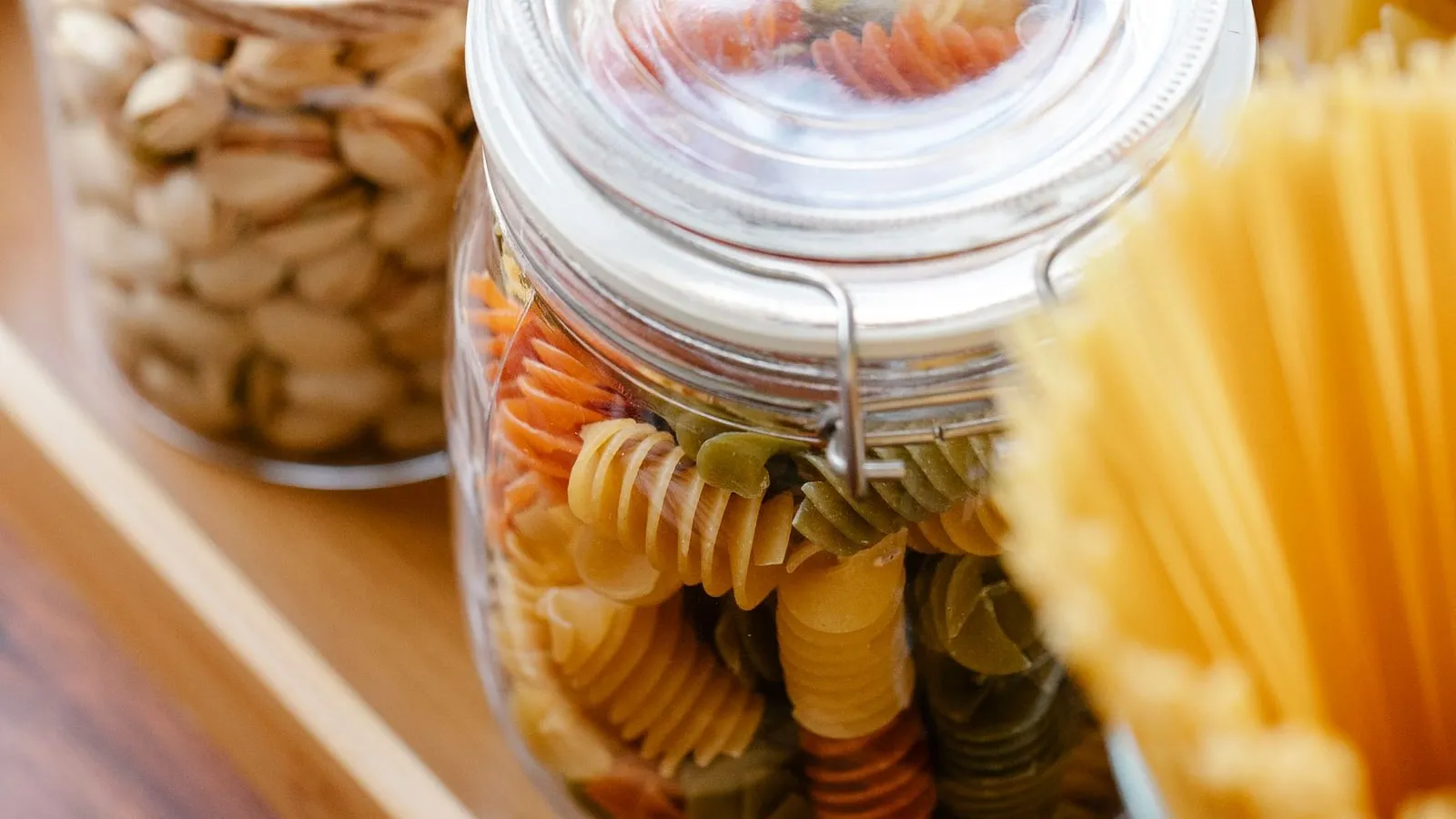
An open box of spaghetti in the back of a cupboard is a different question from a refrigerated package of fresh pasta. Start by identifying which one you have, then check whether the package stayed dry and protected since it was opened.
First decide whether it is a pantry product
This guide is for dry pasta sold on a shelf. If the package was sold refrigerated, follow its label and keep it in the refrigerator; opening it does not turn a perishable product into pantry pasta. Cooked pasta is also a separate case: it is not dry, shelf-stable pantry pasta.
For shelf-stable dry boxed pasta, Barilla says to keep both opened and unopened boxes in a cool, moisture-free cupboard or pantry. It recommends using its products by the package’s “best if used by” date for best quality and says not to refrigerate or freeze its dry pasta because it can absorb moisture. That is Barilla’s direction for its products. Your own package takes priority. Read Barilla’s pasta storage FAQ.
Use the package condition to choose your next step
| What you find | What the source guidance supports | Next step |
|---|---|---|
| Dry, shelf-stable pasta in an unopened, intact package | General pantry estimates are not tied to your exact brand. | Keep it cool and dry; retain the package date and use the product’s own instructions. |
| Opened pasta that still looks and feels dry, with no signs of pests | Barilla recommends a cool, moisture-free pantry for its opened dry pasta. Iowa State Extension advises a dry airtight pantry container for opened whole-grain pasta. | Close the package securely or transfer it to a clean, dry sealed container. Keep the cut-out label or write the product and date on the container. |
| Pasta is visibly infested with insects or webbing | Time estimates do not describe a contaminated package. | Do not use it. University of Minnesota Extension advises throwing away infested dry food and checking other susceptible pantry items. |
| Product says keep refrigerated, or was sold from a refrigerated case | Dry-pasta pantry estimates do not apply. | Follow that product’s cold-storage and after-opening instructions. |
What do the year estimates mean?
Iowa State Extension’s page is specifically about whole-grain pasta. It says to store unopened packages at room temperature for up to two years and opened pasta in a dry, airtight pantry container, using it within one year. Virginia Cooperative Extension’s broader consumer chart lists two years unopened and one year opened for pasta. These are quality-oriented storage references, not proof that every pasta is good until a particular day or automatically unsafe after it. See the Iowa State whole-grain guidance and Virginia Tech’s food-storage chart.
The estimates do not describe a box that became wet or sat open in a humid area. They also should not replace a manufacturer’s date or instructions. If you find insects or webbing in a pasta package, University of Minnesota Extension recommends discarding infested food and inspecting other dry goods. Barilla does not give one universal interval on its FAQ; it tells customers to use the date on its packaging for best quality.
Keep the opened package dry and identifiable
If the original bag or box will not close, move the pasta to a clean container with a tight-fitting lid. Copy the product name and date onto it first. Store it away from steam, splashes, and heat from the stove. A container can keep new moisture and pests out; it cannot reverse dampness or replace the date and directions on the original label.
If you cannot tell whether a package stayed dry, do not rely on a calendar estimate to settle the question. Keep it separate from other pantry food while you check the product-specific guidance. Discard pasta that is visibly infested.
Keep cooked pasta on its own clock
This article does not cover cooked pasta or opened jars of sauce. Those are moist prepared foods, not pantry-stable dry pasta. Use the separate leftovers storage guide for cooked-food refrigeration and timing.