Manufacturer research · 2026-10-17

DELTA 3 vs DELTA 2

Two ways to plan backup power. Compare the details that matter to your home.

EcoFlow

DELTA 3

Where it fits

Selected 120 V essentials after checking running watts, startup demand, and daily energy.

When to consider another option

Loads requiring 240 V or more than the continuous output rating.

More fit considerations

Other situations to consider

  • Households that need a portable unit and can recharge between interruptions.
  • Readers comparing documented transfer behavior with their actual equipment requirements.

Other reasons to choose a different setup

  • Long outages without sufficient battery capacity or a dependable recharge plan.
  • A different variant if your charging requirement exceeds the base model’s documented solar input.

Manufacturer specification record · No hands-on testing · Source records checked on 2026-10-04

Compare EcoFlow DELTA 3 and DELTA 2 across nominal capacity, surge ceiling (3,600 W vs 2,700 W), UPS transfer time (10 ms vs 30 ms), and solar input, with BLUETTI Elite 100 V2 as a reference.

How the options differ

Different households can reach different answers

We compare the US models using their manufacturer specifications and manuals, then interpret the differences for household backup planning. We have not tested either unit. Capacity is nominal battery energy, not measured AC output. We do not rank by commission, current price, star ratings, or advertised boosted-power modes. Per-field source dates appear in the specification table.

Best fit by need

  • You are buying new and want 10 ms transfer and 3,600 W surge: Examine EcoFlow DELTA 3

    The faster 10 ms transfer rating and higher 3,600 W surge ceiling are the primary documented upgrades over DELTA 2.

  • You already own a working DELTA 2 for refrigerator or lighting backup: Keep EcoFlow DELTA 2 in service

    Nominal capacity (1,024 Wh), continuous output (1,800 W), and solar input (500 W) are unchanged on the base DELTA 3.

  • You want a 1,000 W solar-input ceiling instead of 500 W: Compare BLUETTI Elite 100 V2

    Elite 100 V2 pairs 1,024 Wh capacity and 10 ms transfer with up to 1,000 W solar input.

Documented specifications and the older alternative

Manufacturer specifications, not hands-on measurements. Each figure includes its source and check date. “Not documented” means the reviewed record does not establish the feature.

3 models · 6 specification fields
Compare columns. Swipe or scroll horizontally on smaller screens.
Documented specifications and the older alternative. Manufacturer research only.
Specifications Direct comparison
EcoFlow DELTA 3

Paid links — we may earn a commission. As an Amazon Associate I earn from qualifying purchases.
View on Amazon (opens in a new tab) Model guide →
EcoFlow DELTA 2
BLUETTI Elite 100 V2

Paid links — we may earn a commission. As an Amazon Associate I earn from qualifying purchases.

View on Amazon (opens in a new tab) Model guide →
Stored energy
Nominal capacity, before reserve and AC conversion losses.
Continuous AC output
The running-load limit; check motor startup separately.
Base-unit weight Differs
Consider stairs, storage, and who will carry it.
25.3 lb Approximate US manual weight; the US product page rounds this to 25 lb. Source · checked 2026-10-22 (opens in a new tab)
Solar input ceiling Differs
An input limit, not a promise of real solar production.
500 W Exact-model manual (EF-DL-H10-3) specifies 500 W maximum; EcoFlow's product page mixes series-level DELTA 3 Plus details, so confirm the model label before applying this value. Source · checked 2026-10-04 (opens in a new tab)
US AC voltage
Must match the appliance and connection requirements.
120 V only documented US/CA model AC output is 120 V. Source · checked 2026-10-04 (opens in a new tab)
120 V only documented US/Canada AC output is 120 V. Source · checked 2026-10-04 (opens in a new tab)
120 V only documented AC output is 120 V, 15 A maximum. Source · checked 2026-10-04 (opens in a new tab)
Expanded capacity Differs
Requires the manufacturer's compatible extra batteries, sold separately.
Not documented Manufacturer lists compatible extra batteries and markets expansion up to 5 kWh, but this record does not establish an exact Wh ceiling for the standalone DELTA 3 configuration. Source · checked 2026-10-04 (opens in a new tab)
3,072 Wh maximum Requires a separately sold compatible extra battery. Source · checked 2026-10-04 (opens in a new tab)
Not documented Manual documents solar and DC charging inputs, not directly attached battery-capacity expansion; separate Charger/B300K bundles do not establish an expansion ceiling. Source · checked 2026-10-04 (opens in a new tab)

Criterion-by-criterion record

Compare columns. Swipe or scroll horizontally on smaller screens.
Criterion Why it matters EcoFlow DELTA 3 EcoFlow DELTA 2
Unchanged core baseline A newer model number does not automatically increase runtime for a refrigerator or router. 1,024 Wh LFP battery, 1,800 W continuous AC output, six AC outlets, and 500 W max solar input on the base EF-DL-H10-3 manual. Identical 1,024 Wh LFP nominal capacity, 1,800 W continuous AC output, six AC outlets, and 500 W max solar input.
UPS / EPS transfer time Faster switchover reduces the chance that desktop computers, NAS drives, or networking gear reboot during a grid drop. 10 ms standby UPS transfer time documented in the DELTA 3 manual. 30 ms EPS transfer time documented in the DELTA 2 manual.
Documented surge ceiling Compressor and motor loads draw a brief startup spike above their running watts. 3,600 W surge figure in the exact-model US manual. 2,700 W surge figure in the DELTA 2 US manual.
Weight and expansion documentation Both sit around 27 lb and support EcoFlow extra batteries, though exact ceiling documentation differs. 27.6 lb approximate weight; family expansion is marketed up to 5 kWh, though standalone Wh ceiling is left unverified in our base record. 27.0 lb listed weight; product page documents expansion up to 3,072 Wh with a compatible extra battery.

Before you order

Match the unit to your actual load

  1. Write down simultaneous running watts, the largest startup demand, and measured daily watt-hours. A larger Wh number does not raise the output limit.
  2. Check the exact US model and bundle. Panels, expansion batteries, and charging cables may be sold separately.
  3. Read the seller, return, and warranty terms for the listing you select. A manufacturer specification is not proof that every marketplace bundle is equivalent.
  4. Plan a test with your actual equipment before relying on it. Neither a brief UPS transfer time nor an advertised runtime guarantees compatibility with critical equipment.
Estimate battery runtime →

Paid links — we may earn a commission. As an Amazon Associate I earn from qualifying purchases.

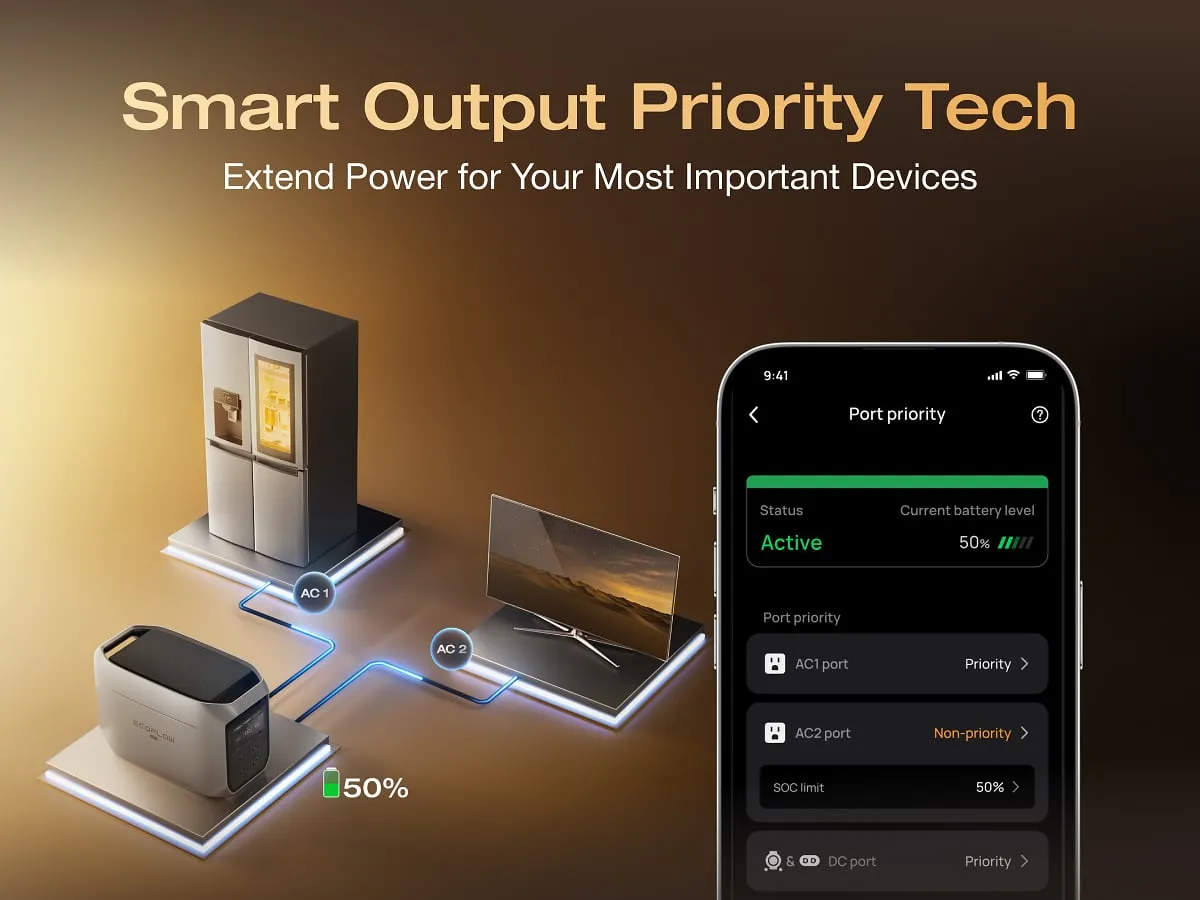
EcoFlow DELTA 3 portable power station showing front display panel and AC power ports Check price at Amazon
Photo: EcoFlow Technology Inc. / PR Newswire Source record
Manufacturer-documented model

EcoFlow DELTA 3

The base DELTA 3 is a 1,024 Wh, 1,800 W portable station for selected 120 V essentials. Start with the exact model: DELTA 3, DELTA 3 Plus, and other variants do not share every charging specification.

Read the complete DELTA 3 guide

Source records checked on 2026-10-04 for the displayed figures. They are not hands-on test results. Confirm the exact model, connections, and load requirements before buying.
Paid links — we may earn a commission. As an Amazon Associate I earn from qualifying purchases.

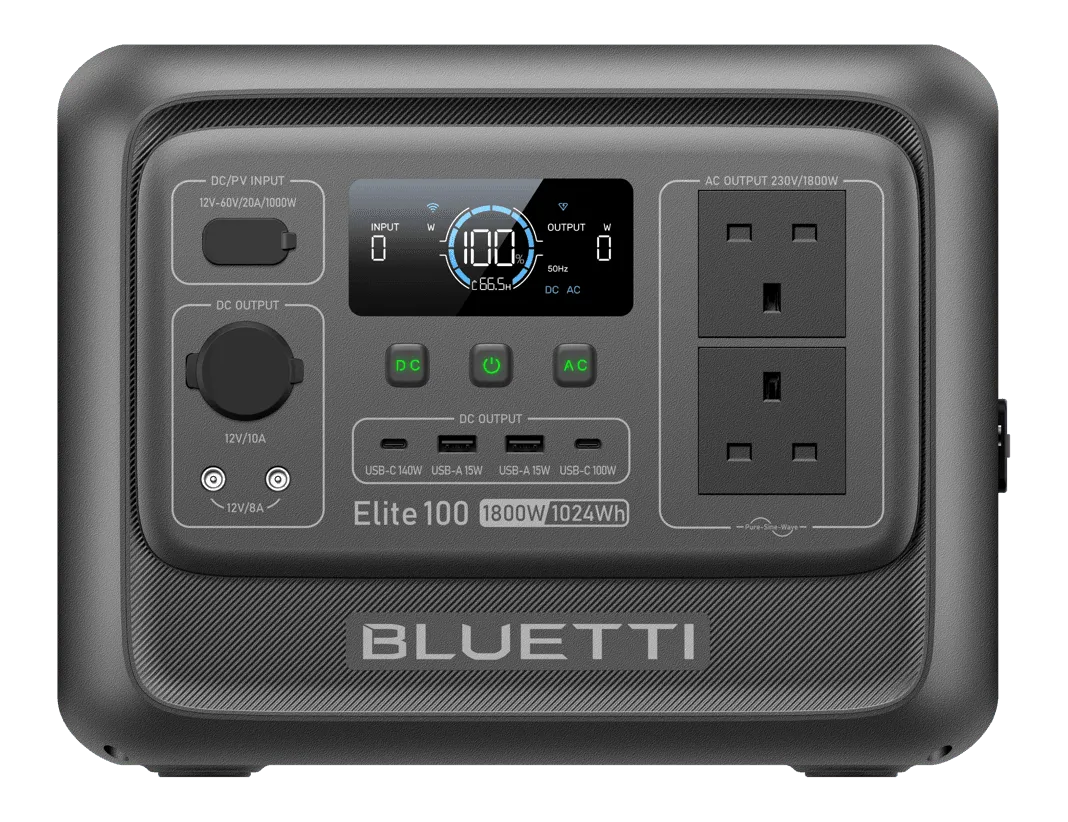
BLUETTI Elite 100 V2 portable power station showing front interface and compact housing Check price at Amazon
Photo: BLUETTI Power Inc. Source record
Older-model alternative

BLUETTI Elite 100 V2

The Elite 100 V2 combines a 1,024 Wh battery and 1,800 W AC output with a documented 1,000 W solar-input ceiling. Its lower listed weight makes it worth comparing with the older AC180 when carrying and solar charging matter.

Nominal capacity
1,024 Wh
Continuous AC output
1,800 W
Base-unit weight
25.3 lb

Source records checked on 2026-10-22. This is research, not hands-on testing. Read the manufacturer manual.

Evidence sources

Related specification comparisons

Compare other portable power station matchups