Decks can be exposed to embers on top, combustible objects underneath and fire moving through attached components into a house. Before wildfire season, remove safely reachable combustible clutter, observe exposed joints from stable ground and ask a qualified contractor about approved decking, flashing and enclosure details. Do not crawl beneath unsafe structures or install improvised ember screening.
Preparedness library
Complete guide library
Browse practical planning guidance for outages, water, food, backup power, communication, and home safety. Start with a topic or browse by publication date.
Archive page 3
Earlier published guides
A wildfire evacuation car kit should support an early, lawful departure—not driving through flames or closed roads. Keep a tested charging lead, paper contacts, maps and appropriate water/food accessible; load medication, documents, pet carriers and child essentials from personal bags when departing. Check fuel or charge and a backup ride before warnings, then follow local evacuation routes.
Before wildfire season, give each pet an appropriate carrier or restraint, current identification, necessary medicines and records, and an agreed caregiver when you are away. Confirm an actual pet-friendly destination and transport capacity, and plan to leave early when loading animals takes time. An animal kit is not a reason to delay an evacuation order.
A combustible fence or gate attached to a house can create a flame pathway to the structure. Before replacing anything, record which sections touch or approach the home, the combustible debris along them, and who owns the fence. Ask a qualified professional and local fire authority about accepted noncombustible transitions, permits and neighborhood rules; a material label is not a guarantee.
A homeowner handoff for rooftop ember-exposure and ventilation risk that avoids unsafe DIY vent blocking or roof access.
Preventing avoidable household water damage starts with accessible checks: look and listen for drips, running toilets, damp hoses, appliance connections and recurring wet spots; compare water-bill trends and know who controls the main shutoff. Report hidden or active leaks to the owner or qualified plumber. Never enter wet electrical areas, force shared valves or assume a leak sensor can stop every leak.
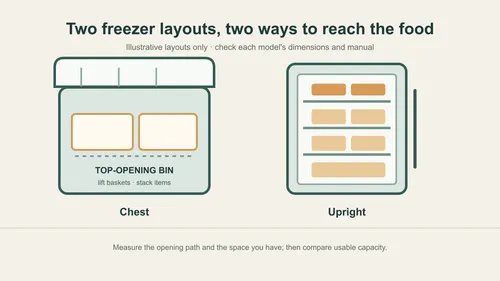
A freezer can fit its capacity into the room and still be awkward to use. Compare the opening, access, and exact model details before choosing a chest or upright layout.
Decode a bleach date only when its manufacturer documents the code, then check that product’s storage guidance and label for the job.
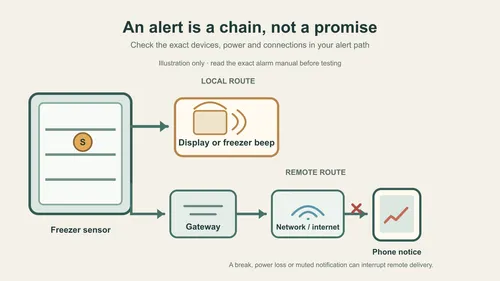
A freezer alarm can warn locally or send a remote notification, but each depends on a different chain of devices and power. Map what your alarm can report before relying on it.
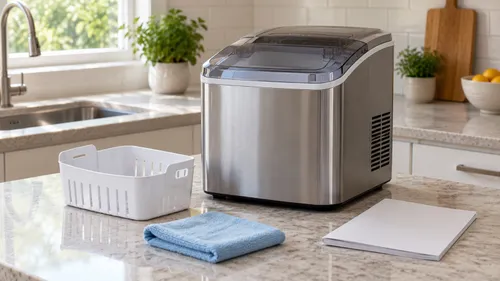
Find the model-specific cleaning, descaling, sanitizing, rinsing, and drain steps before returning a portable ice maker to use.
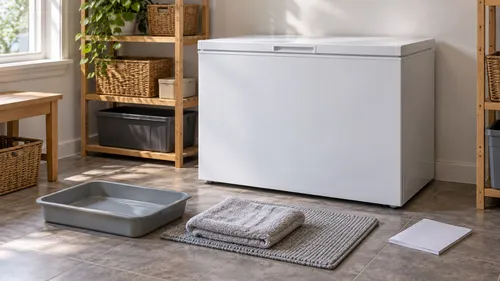
Find out whether your freezer is meant to be defrosted by hand, then use its own manual for the power, food-transfer, drainage, and restart steps.
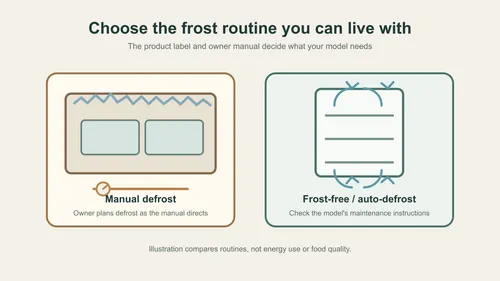
The difference between manual defrost and frost-free is mostly about owner upkeep. Decide how often you want to plan a defrost, then compare model-specific energy and maintenance instructions.
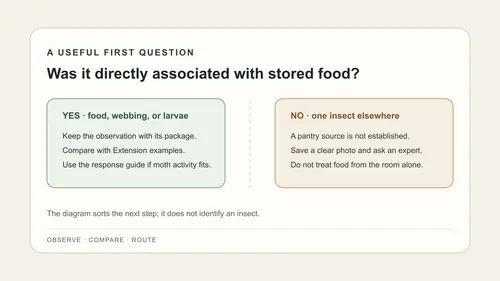
A small insect in a kitchen is not automatically a pantry pest. Sort the finding by its connection to stored food, compare a few source-linked examples, and choose a useful next step.

Water on a window can come from moisture condensing on cold glass or from another source. Record where and when it appears so a building professional can assess it.
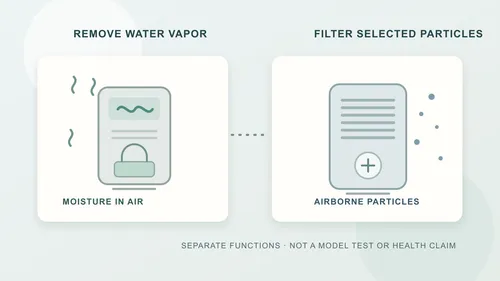
One appliance removes water vapor; the other filters selected airborne pollutants. Use what you observe to choose the right next guide.

If cooking oil or grease catches fire, do not carry the pan or throw water on it. A lid may smother a small pan fire only when it is safe to reach; if the fire is spreading or you are unsure, get out and call for help.
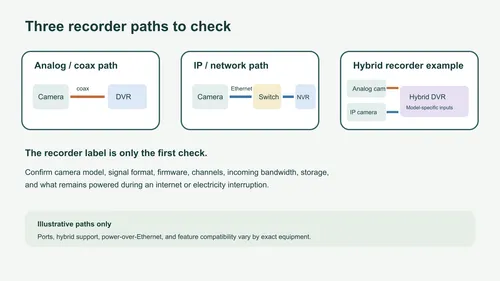
Before replacing a camera recorder, identify the camera signal and cable, then confirm the exact recorder's supported models, bandwidth, storage, and local recording behavior.
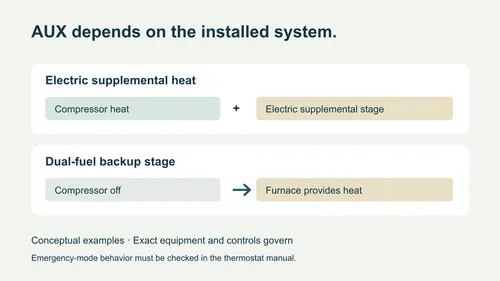
Learn why AUX and emergency heat are different, how dual-fuel systems change the comparison, and what to record before asking your HVAC technician.
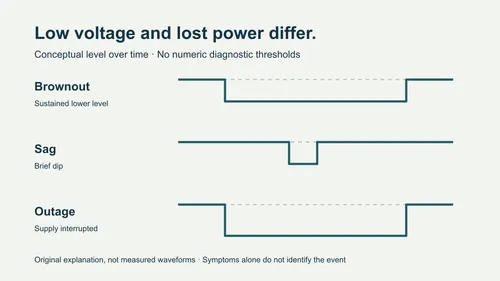
Understand sustained low voltage, brief sags and complete outages. Compare voltage regulation, surge protection and battery backup without diagnosing home wiring.
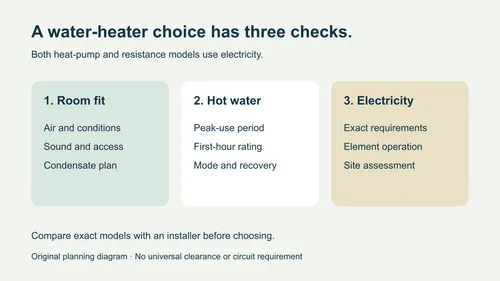
Compare heat-pump and resistance water heaters by room fit, hot-water delivery, operating modes and electrical requirements before an installer visit.