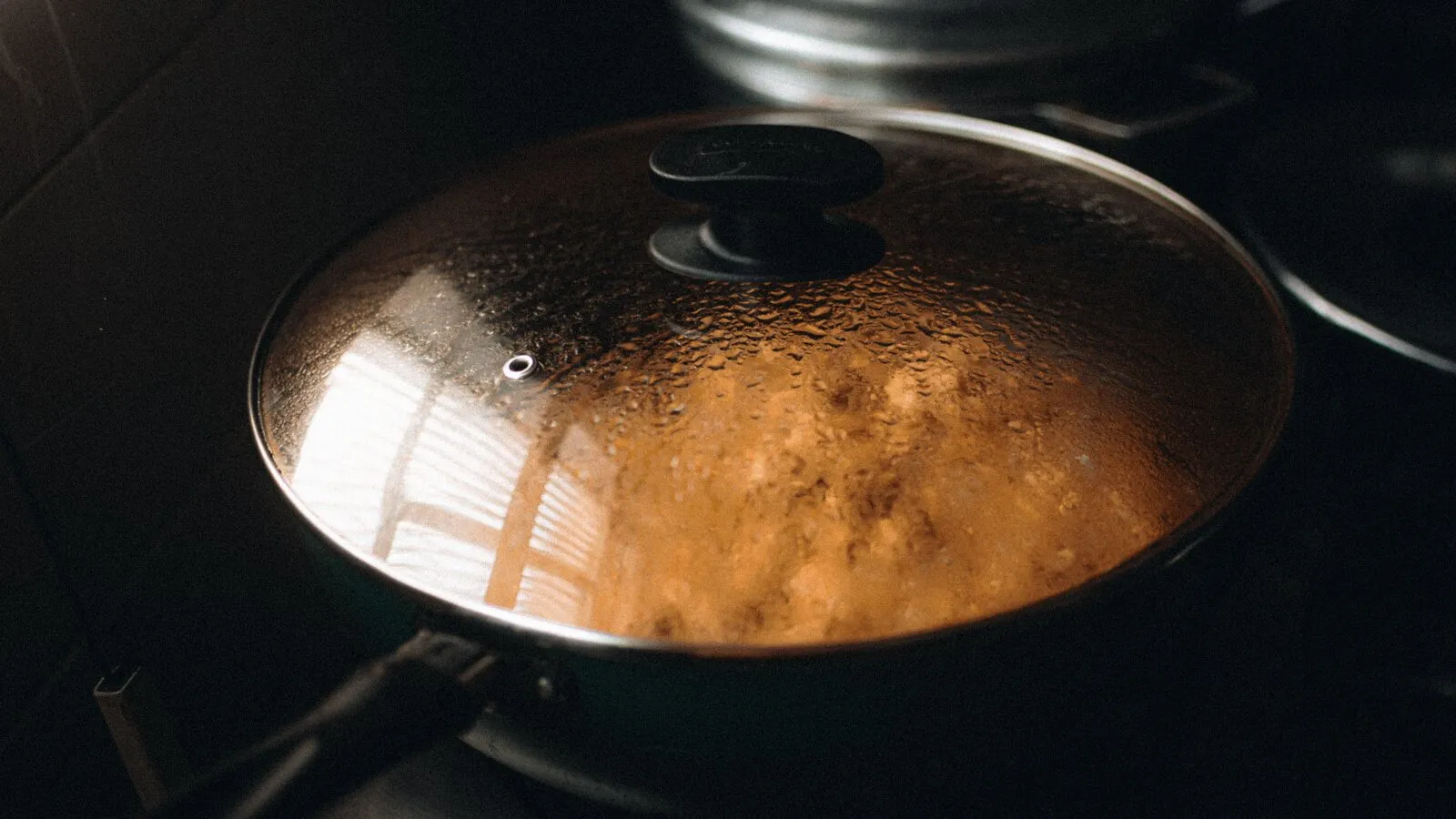
If a pan of hot grease catches fire, do not carry it to the sink or outside. Never pour water on burning grease. CPSC advises calling the fire department immediately; make the call from a safe place. A lid may smother a small pan fire, but only if you can cover it without reaching across flame, leaning over the pan, or moving closer to smoke. If the fire is spreading or you are uncertain, leave and call from outside.
First decide whether the pan can be reached safely
USFA says to keep a pan lid or baking sheet nearby and use it to cover the pan if it catches fire. CPSC says to slide a lid over a grease or oil fire, then turn off the heat and leave the lid on until the pan cools. This is not an instruction to approach every pan fire. If flame or smoke blocks the path to the lid or stove control, do not reach through it.
| What is happening | Safer next decision |
|---|---|
| Fire is small and contained to the pan; a lid is already within safe reach; you can cover without leaning across flame or smoke | Slide the lid over the pan. Do not move it. If the burner control is safely reachable after covering, turn off the heat. Leave the lid in place until the pan cools, and call the fire department from a safe place as CPSC advises. |
| Fire is spreading beyond the pan, smoke is affecting you, or reaching the lid/control would put you near flame | Alert people nearby, leave by a safe route, close a door behind you if it does not delay escape, stay out, and call 911 from a safe location. |
| You are not sure the fire is small or whether the route is safe | Treat the uncertainty as a reason to leave and call for help. Do not try to test the fire with water or move the cookware. |
The CPSC advises calling the fire department immediately when a cooking fire starts. Make that call from a safe place; if the fire is spreading or your exit is at risk, leave first and call from outside. CPSC says never carry a burning pan outside. That movement can spill burning grease and put the person carrying it in the fire’s path. The same safety source says not to use water or flour on cooking fires. USFA’s public fire message also says never throw water on a grease fire.
If the fire does not stay contained
Once a fire is spreading, producing smoke that affects you, or blocking your exit, the task is to get people out—not to rescue the meal or equipment. Alert anyone nearby as you leave if you can do it without delaying. Stay outside and call 911 or your local emergency number. Tell the dispatcher that there is a kitchen fire and whether anyone may still be inside. Do not re-enter.
Do not open a covered pan to check whether the flame is out. Leave the lid in place while the pan cools, as CPSC directs. If the pan or nearby surfaces remain hot, smoking, or unsafe, keep clear and let firefighters determine when the area can be used again.
Keep the prevention step simple
USFA advises staying by the pan, turning off the burner if you leave the kitchen, and turning it off if you see smoke or grease begins to boil. Keep a pan lid or baking sheet nearby before heating oil. This is an ordinary preparation step; do not practice by lighting oil or creating smoke.
The separate fire-extinguisher selection and use guide explains extinguisher classes, inspection, and its escape-first gate. An extinguisher is not a reason to delay leaving when a fire is spreading or you are unsure.
Pan-Fire Decision Card
| Question | If yes | If no or unsure |
|---|---|---|
| Is the fire small and contained to the pan? | Continue to the next question. | Alert others, leave, stay out, and call 911 from a safe place. |
| Can you slide a lid over it without reaching across flame or smoke? | Cover the pan; do not move it. | Leave and call for help. |
| After covering, can you reach the burner control without exposure? | Turn the heat off and leave the lid in place until the pan cools. | Do not reach for it; keep clear and follow emergency responders. |
Call the fire department immediately from a safe place, as CPSC advises; leave first if the fire or smoke makes remaining unsafe.
Never: use water or flour on the cooking fire, carry the burning pan, or re-enter a burning home.
Home Resilience Hub • Read before an incident; never practice with flame
For advance household escape routes, meeting place, and assigned help, use the home fire escape plan.