Collected rainwater is not automatically drinking water
Roof material, debris, bird and animal waste, smoke, storage conditions, treatment, and local rules all affect whether water is appropriate for a particular use. Keep a known safe drinking-water supply first.
The CDC’s rainwater health overview says rainwater is not necessarily safe to drink without removing germs and chemicals. It recommends contacting the health department about testing, treatment, and safe uses.
Rainwater can still support a useful home resilience plan. The key is to decide the intended use before selecting a barrel, tank, filter, or plumbing connection.
Start with the intended use
Lower-exposure uses may include watering non-food plants or cleaning items not used for cooking and eating. Drinking, cooking, brushing teeth, bathing, and watering edible plants require a higher level of water quality and local guidance.
Write one intended use on the plan:
- Garden or landscape irrigation.
- Outdoor cleanup.
- Toilet flushing where local plumbing rules allow it.
- Non-potable household backup.
- Potable use only with approved design, testing, treatment, and local oversight.
Do not let a non-potable system connect back into treated household plumbing. The CDC warns that rainwater can contaminate previously treated water.
Estimate collection capacity
Oregon State University Extension estimates potential collection as catchment area × rainfall depth × 0.62 gallons per square foot per inch, before collection losses.
roof collection area × rainfall in inches × 0.62 × collection efficiency
Collection efficiency accounts for first-flush diversion, splash, leaks, overflow, and incomplete drainage. Use the result to size overflow and storage, not as a promise of usable or drinkable water.
For emergency drinking and cooking, use the Water Storage Calculator and store known safe water first. Rainwater is a separate source that may need testing and treatment.
Check rules and site conditions
Rainwater rules vary by state and locality. Before installing a large tank or connecting any plumbing, check:
- State and local collection rules.
- Building, plumbing, and cross-connection requirements.
- Health department requirements for potable use.
- Homeowners association or rental restrictions.
- Roof and gutter materials.
- Setbacks, drainage, and overflow rules.
- Structural support and freeze conditions.
If the roof, coating, flashing, gutters, or storage material cannot be evaluated, do not assume the water is suitable for household use.
Build in a safe order
1. Inspect the catchment
Keep roofs and gutters maintained. Air pollution, wildfire smoke, roofing materials, animal waste, and long dry periods can add contaminants.
2. Divert the first flush
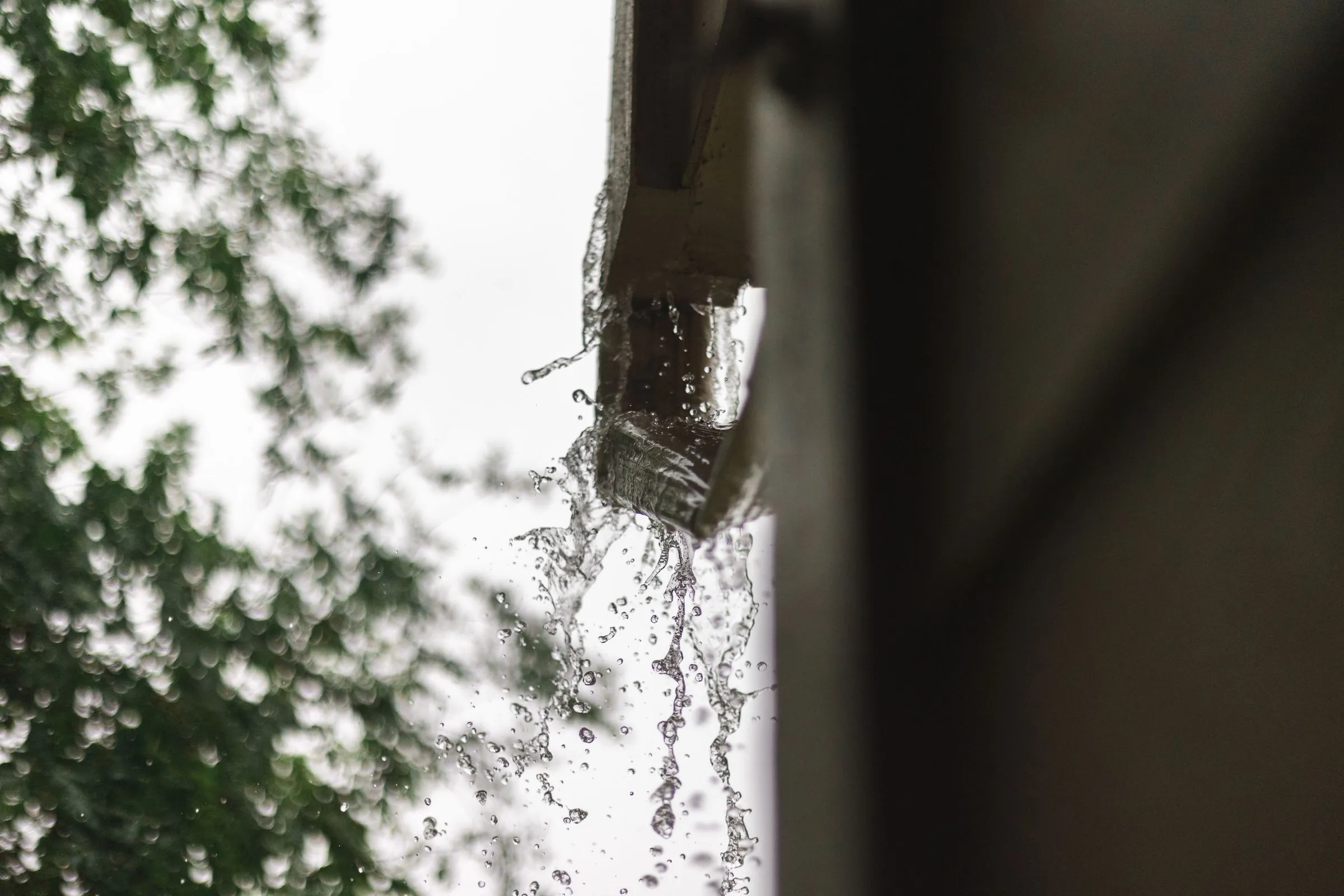
A first-flush diverter can reduce some of the dirt, germs, and chemicals washed from the roof at the start of a storm. It does not make the remaining water potable.
3. Screen and close the inlet
Cover the tank tightly. For openings without lids, use wire mesh with holes smaller than an adult mosquito. The CDC also recommends a weekly check to empty and scrub other water-holding items around the home; follow the tank manufacturer’s instructions and local mosquito-control advice for the stored water.
4. Support the full weight
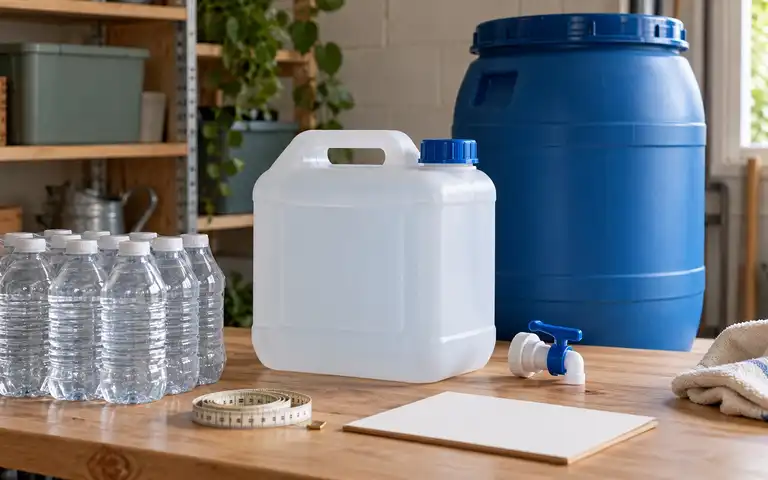
Water weighs about 8 pounds per gallon before adding the container’s weight. Place the container on a stable, level base designed for the full load; ask a qualified professional about structural support for a large tank. Protect children and pets from openings, tipping, and unstable stands. Oregon State University Extension uses this approximate planning weight for full storage tanks.
5. Route overflow
Direct overflow away from foundations, electrical equipment, neighboring property, walkways, and locations where erosion, standing water, or ice would create a hazard.
6. Label the system
Mark non-potable outlets and containers clearly. Keep dedicated hoses, pumps, and tools so rainwater equipment does not contaminate drinking-water equipment.
Maintain the system
A rainwater system needs maintenance after storms and through the seasons.
- Inspect screens, lids, gutters, diverters, spigots, and overflow paths.
- Remove debris and repair leaks.
- Empty and clean barrels according to local and manufacturer guidance.
- Prevent mosquito access and standing-water hazards.
- Protect or drain equipment before freezing weather.
- Check labels and separation from potable equipment.
- Test for germs and chemicals if the water will be used for drinking, cooking, or bathing.
The CDC advises regular testing when rainwater is used for higher-exposure purposes. Ask the health department which tests and laboratory are appropriate for local roof materials, air conditions, and intended use.
Keep the emergency plan separate
Rainwater should not displace known safe storage.
- Calculate and store a household potable baseline.
- Use rainwater for the written intended use.
- Follow local health advice before any higher-exposure use.
- Do not use rainwater affected by suspected fuel or toxic chemicals.
- Keep the Emergency Water Safety Guide with the household plan.
The Water Treatment Methods guide explains why treatment must match the known hazard. A germ-focused method does not guarantee removal of roof, smoke, industrial, or storage-related chemicals.
Small-system checklist
- Intended use written down
- Local rules and property requirements checked
- Roof, gutters, and materials inspected
- First-flush and debris controls planned
- Secure lid or screened inlet installed
- Stable base sized for full weight
- Safe overflow route tested
- Non-potable containers and outlets labeled
- Mosquito and seasonal maintenance scheduled
- Potable emergency water stored separately
Rainwater collection FAQ
- Can I drink water from a rain barrel?
- Do not assume it is safe. Rainwater can contain germs and chemicals from air, roofs, gutters, animals, and storage. Contact the health department about testing, treatment, and approved potable use.
- How much rainwater can a roof collect?
- A planning estimate multiplies roof area by rainfall in inches by about 0.62 gallons, then applies a collection-efficiency factor. Use it for sizing, not as a guarantee of usable water.
- Does a first-flush diverter make rainwater safe to drink?
- No. It can reduce some contaminants washed from the roof, but it does not replace testing, treatment, maintenance, or local health guidance.
- Can rainwater replace emergency water storage?
- No. Keep a known safe potable supply first. Rainwater can be a useful separate source for an approved intended use.
Decide the use before buying the barrel
Write one approved intended use, the local office or rule you checked, and the maintenance owner on the plan. If the household still needs drinking and cooking water, calculate and store that known-safe supply before treating rainwater as reserve capacity.
Before adding another water supply project, the household water-use audit helps compare billing days, check for leaks and choose one measurable conservation change.