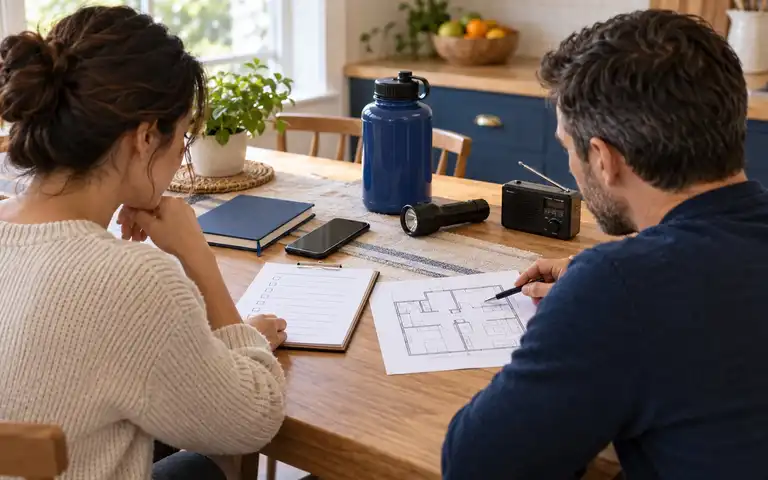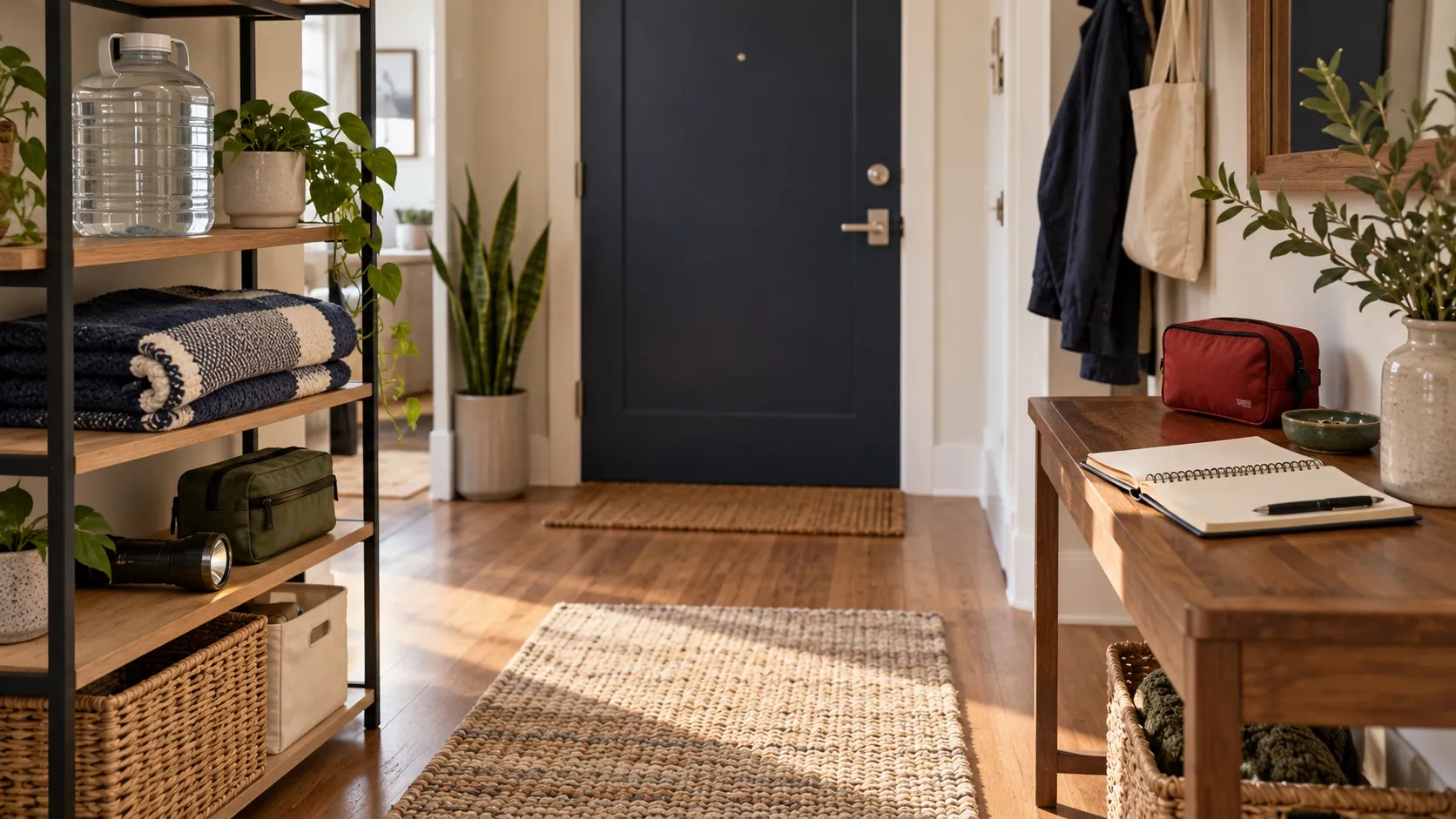
Apartment preparedness is less about hiding a large inventory and more about building a small system you can reach, carry, and use safely. Shared hallways, alarms, elevators, utilities, balconies, and building rules change what is practical.
Start with the Ready.gov emergency kit list, then adapt it to your building, health needs, climate, storage, and evacuation options. The Apartment & city readiness page connects this apartment plan to broader household guides.
Ask the building questions first
Contact the property manager, housing office, or association before an emergency. Ask:
- How are residents notified if power, water, fire alarms, elevators, or entry systems fail?
- Which exits remain usable, and where is the outdoor meeting point?
- Are evacuation chairs or staff assistance available for residents who need them?
- Where are utility shutoffs, fire extinguishers, and emergency contact numbers?
- What are the rules for grills, fuel cylinders, batteries, generators, and balcony use?
- Does the building have a generator, and what does it actually power?
Do not assume an elevator, electronic key, garage door, water pump, hallway light, or cell signal will work. Walk both a primary and alternate exit. If stairs are a barrier, make a plan with building management, caregivers, and local emergency services before an evacuation is urgent.
The USFA fire-escape guidance covers clear exits, an outside meeting place, and high-rise stair use. During a fire, do not use an elevator unless the fire department directs it; follow the building’s fire plan and responder instructions.
Build a compact first layer
Choose one accessible shelf, cabinet, or bin for supplies used in the first few days.
- Water: Store a manageable amount first, then plan a larger target from household size, duration, pets, and any medical instructions.
- Food: Choose familiar shelf-stable food that can be eaten without cooking. Include a manual can opener when needed.
- Medication and care: Keep a current medication list, pharmacy and clinician contacts, glasses, hearing-aid batteries, mobility supplies, and the care items the household normally uses. Ask a pharmacist or clinician about emergency refills and temperature-sensitive medicine.
- Light: Keep headlamps or flashlights where they can be reached in the dark. Avoid candles.
- Communication: Store a charged power bank, correct cables, a printed contact card, and the local alert instructions.
- Sanitation: Include soap, hand sanitizer, toilet paper, sturdy bags, wipes, menstrual supplies, and any building-specific sanitation plan.
- Documents: Keep copies of identification, insurance, lease contacts, medical information, and pet records in a protected grab-and-go folder.
Use under-bed or high shelving only for items that remain safe and accessible there. Do not place heavy water containers where they can fall, block an exit, overload a shelf, or become impossible to lift.
Use a no-cook-first food plan
A power outage is not the time to test indoor combustion equipment. Prioritize meals that do not need heat: nut or seed butter, ready-to-eat fish or beans, shelf-stable milk, crackers, fruit, and food selected for household allergies and dietary needs.
Never operate a charcoal grill, gas grill, generator, camp stove, or other outdoor combustion device in an apartment, hallway, stairwell, garage, basement, or enclosed balcony. A cracked window does not make prohibited equipment safe. Carbon monoxide can move between units and through openings.
Use a portable cooking device only where the manufacturer, lease, building rules, and local fire code permit that exact device and fuel. Store no fuel indoors unless all of those authorities permit it. The safest default is a no-cook menu and, if available, an electric appliance used within its rated load after normal power returns.
Read Indoor Heating Safety During a Power Outage before making a backup-heat plan.
Plan power by task
List the devices that affect safety, communication, medication, or evacuation. Record each device’s input and charging method. A small power bank may be enough for phones. A larger battery may help with a laptop or approved medical device, but only the device manufacturer and care team can confirm medical compatibility.
Can you run a generator on an apartment balcony?
Do not use an apartment balcony as an improvised generator site. The CDC carbon-monoxide guidance says generators must operate outdoors, more than 20 feet from windows, doors, and vents, with a battery-powered or battery-backup CO alarm inside. Distance alone does not approve a site. Check building rules and local fire requirements before storing or operating any fuel-burning equipment. A battery power station can also have placement and operating limits; follow its exact manual.
Do not run a fuel generator on a balcony, in a garage, or near another unit’s openings. The CDC carbon-monoxide guidance requires generators outdoors, more than 20 feet from windows, doors, and vents, with a battery-powered or battery-backup CO alarm inside. Distance alone does not approve a site. Do not overload a battery or inverter. Use the Outage Readiness Planner for fixed outage choices and suggested actions, then verify equipment against its manuals.
For apartment households where outdoor fuel generators are prohibited, compare indoor-safe 1kWh LFP stations in our EcoFlow DELTA 3 vs. Jackery Explorer 1000 v2 comparison and Jackery Explorer 1000 v2 vs. Anker SOLIX C1000 Gen 2 matrix.
Jackery Explorer 1000 v2
At 23.8 pounds with a folding handle and 1,070Wh / 1,500W LFP output, the Explorer 1000 v2 is easier to store in an apartment closet or carry down stairs than heavier 2kWh units while still running a refrigerator or Wi-Fi/medical electronics indoors without exhaust.
- Nominal capacity
- 1,070 Wh
- Continuous AC output
- 1,500 W
- Base-unit weight
- 23.8 lb
Source records checked on 2026-10-04. This is research, not hands-on testing. Read the manufacturer manual.
Paid links — we may earn a commission. As an Amazon Associate I earn from qualifying purchases.
 Check price at Amazon
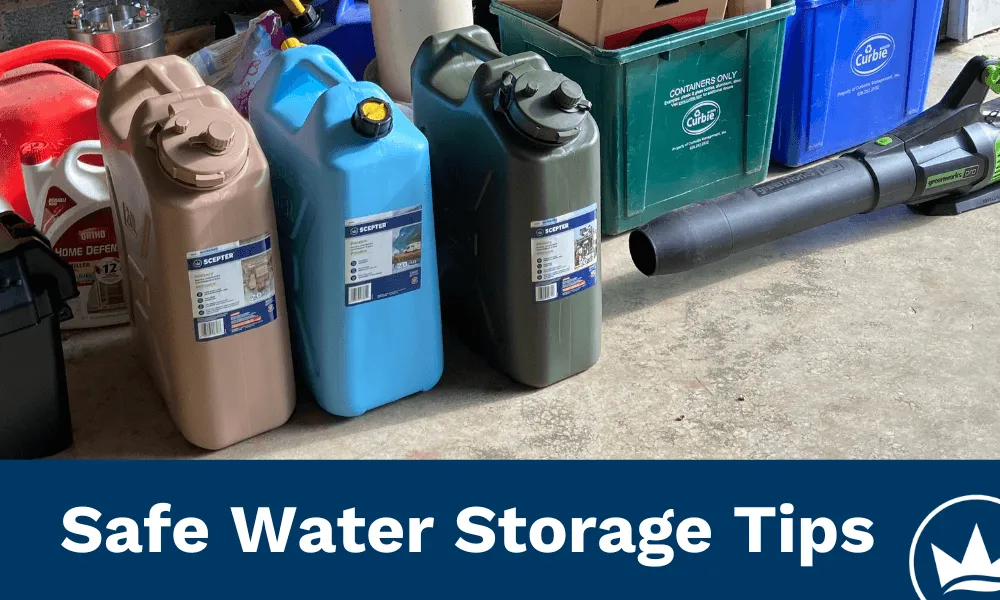
Scepter Flow Control Water Can (WCG501)
High-rise booster pumps can lose pressure during a building outage. A 5-gallon BPA-free container with a flow-control dispensing spout fits on a floor-level closet footprint without requiring a 55-gallon drum.
- Listed water capacity
- 5 US gal
- Empty container weight
- Not verified in this source record
- Stacking when filled
- Not verified in this source record
Source records checked on 2026-10-22. This is research, not hands-on testing. Manufacturer source.
Apartment power-outage checklist
An apartment outage has two layers: your unit and the building. Check both before assuming a charged battery solves the problem.
First 15 minutes
- Confirm fire, gas, flooding, electrical, and urgent health hazards.
- Check the building’s official message channel and utility status.
- Find a flashlight before moving through dark halls or stairs.
- Keep refrigerator and freezer doors closed.
- Note when refrigeration lost power. An unopened refrigerator generally keeps food cold for about four hours; follow the FoodSafety.gov discard chart for perishables after that window without reliable cooling. Prior handling, actual temperature, or repeated door opening can require earlier disposal.
- Confirm which household member needs medication, powered care equipment, mobility help, or a temperature-safe destination first.
Before the first night
- Verify stair and exit lighting rather than assuming emergency lighting will last indefinitely.
- Confirm whether the elevator, electronic entry, garage gate, water booster pump, and shared telecom equipment still work.
- Preserve phone power and keep a paper contact/building-management number.
- Decide whether the unit can remain at a safe temperature without central HVAC.
- Check whether water pressure and toilets still operate normally.
- Put shoes, keys, identification, medications, phone power, pet/service-animal supplies, and the portable bag where they can leave with you.
If the outage reaches Day 2–3
- Recheck the building’s water, sanitation, access-control, elevator, fire/life-safety, and management status.
- Continue the no-cook shelf-stable plan; the Day 2–3 checkpoint does not extend refrigerated-food safety limits.
- Recalculate battery runtime from the loads still worth powering.
- Confirm a safer destination before stairs, heat/cold, care needs, or water access become a crisis.
Print this section with the Long Power Outage Planning guide and keep the outage-planner result with the apartment contact sheet.
Make neighbor support specific and voluntary
A simple check-in is more useful than a vague promise to share everything. With consent, exchange contact information with one or two nearby residents and agree on a small plan:
- how to report an alarm, water leak, or blocked exit;
- who might need a knock at the door;
- where official building updates will be posted;
- what information should remain private;
- when to call emergency services rather than attempting a rescue.
Do not publish a list of medications, disabilities, valuables, or emergency supplies to a large group. Share only what is needed with people you trust.
Keep a portable evacuation layer
A grab-and-go bag should be light enough for the person carrying it. Include medication, identification, contacts, water, a snack, light, phone cable, weather-appropriate clothing, keys, and essential mobility or pet items. Keep shoes and the bag where they do not block the exit.
Follow alarms and official evacuation directions. Never re-enter for supplies. If smoke, fire, carbon monoxide, structural damage, flooding, or another immediate danger is present, call the emergency number for your area from a safe location.
Next, build the apartment’s compact home and evacuation layers without blocking the exit or depending on prohibited fuel storage.