72-Hour Winter Emergency Kit: Home, Vehicle, and Evacuation Layers
Build a winter kit for home, vehicle, and evacuation with water, familiar food, medication, warm layers, light, communication, safe heat limits, and maintenance.
Interactive checklist
Winter kit baseline
0 of 4 complete. Progress stays in this browser and also appears in My Plan.
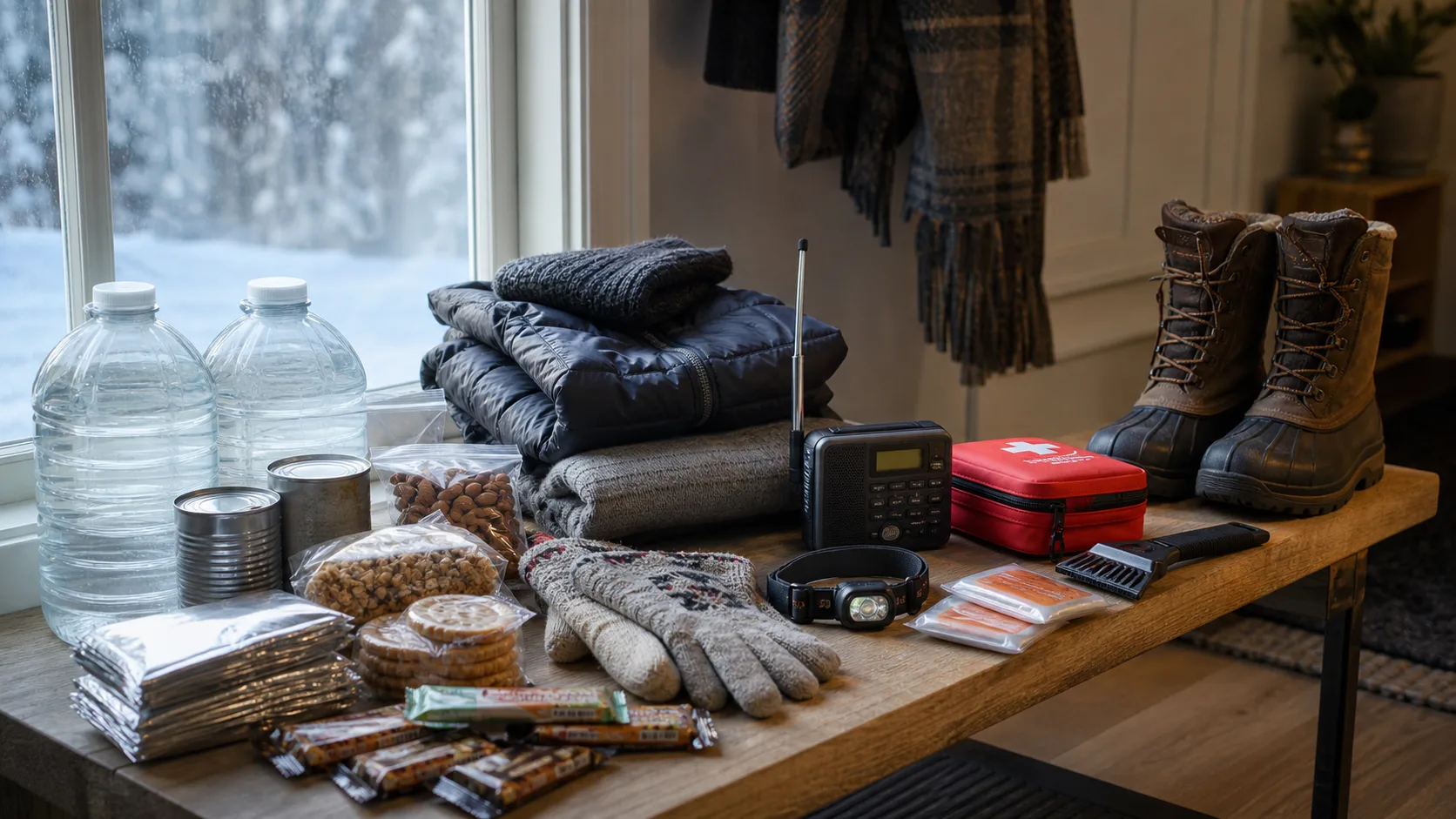
A winter kit adds cold-weather clothing, vehicle needs, and a safe-heating decision to the ordinary household kit. It does not need a fixed calorie target, a portable flame, or a promise that the household can remain home for exactly 72 hours.
Start with Ready.gov emergency kit guidance and the Home Emergency Kit Guide. This page adds the cold-weather home, vehicle, and evacuation layers; the broader winter guide covers alerts and storm decisions.
Home layer
- Stored potable water in food-grade containers
- Familiar no-cook meals and snacks
- Medication list, pharmacy contacts, and ordinary care supplies
- Flashlights or headlamps and correct batteries
- Phone power and charging cables
- A battery radio when it fits local alerts
- Soap, toilet paper, sturdy bags, and cleaning supplies
- Dry base, insulation, and outer layers appropriate to the climate
- Hats, gloves, warm socks, and sturdy footwear
- Blankets or sleeping bags in good condition
- Smoke and carbon monoxide alarms maintained to their manuals
- Printed contacts, local instructions, and a destination plan
Use the Home Emergency Kit Guide to adapt water and food quantities for your household. Adjust for pets and medical guidance.
Portable evacuation layer
Keep this layer light enough for the person expected to carry it.
- identification and protected copies of essential records;
- medication and written instructions;
- water and a small amount of familiar food;
- phone, cable, and power bank;
- light and spare batteries;
- dry socks, gloves, hat, and a warm layer;
- hygiene supplies;
- child, pet, mobility, hearing, or vision essentials;
- keys, route, destination, and out-of-area contact.
Do not pack so much water or gear that the bag blocks an exit or cannot be moved. Store larger household quantities separately.
Vehicle layer
The vehicle kit supports safe travel; it does not make driving through a closure or warning safe.
- warm layers, blankets, and sturdy footwear;
- water and shelf-stable food protected from temperature damage;
- phone charger and power bank;
- flashlight or headlamp;
- ice scraper and snow brush;
- traction aid appropriate to the vehicle and local conditions;
- first-aid supplies;
- reflective signaling item;
- paper map and contacts;
- medication and mobility items needed during travel.
Follow vehicle-manufacturer instructions and local winter-driving rules. The National Weather Service winter driving guidance explains what to do if stranded.
Heating belongs in a plan, not a bag
Start with dry clothing, bedding, draft control, one occupied room, and a heated backup location. Use only installed, maintained, or manufacturer-approved heating equipment exactly as directed.
Do not add a camp stove, grill, homemade alcohol burner, candle-pot device, or temporary wood stove as indoor heating equipment. Under CDC carbon-monoxide guidance, never run a generator, vehicle, or other engine in a home, garage, basement, crawl space, shed, or enclosed porch.
Read Indoor Heating Safety and use the Outage Readiness Planner to define when the household will move to a safe heated place.
Food and water in freezing conditions
Store water where it is unlikely to freeze and where containers will not be damaged or become too heavy to move. Do not add salt or another substance to drinking water to prevent freezing.
Choose no-cook food for the first layer. During an outage, keep refrigerator and freezer doors closed and follow USDA emergency food safety guidance.
Medication and powered equipment
Ask the pharmacist or clinician how medication should be stored and what emergency refill options apply. Ask the equipment provider which backup power source is approved for a medical device. A generic kit cannot answer either question.
Use the backup power systems guide to organize load questions. Verify device compatibility and runtime with the provider and manual.
Maintain the three layers
Before winter and after any use:
- Update contacts, medication information, destinations, and routes.
- Rotate water and ordinary pantry food according to guidance.
- Charge batteries and test lights and alarms.
- Check clothing sizes, warmth, and condition.
- Inspect vehicle items for leaks, corrosion, or temperature damage.
- Practice finding and carrying the evacuation layer.
Keep a paper inventory beside the kit with storage locations, inspection dates, and the person responsible for each layer. That record makes a missing charger, expired item, or outgrown coat easier to correct before a warning arrives.
Questions about winter kit layers
Does a 72-hour winter kit need a portable heater?
Not automatically. The kit needs warm clothing, bedding, alarms, a safe home-heating plan, and a heated backup location. Add a portable heater only when the exact model is approved for the intended location and the household can follow every manual requirement.
Should water stay in the vehicle all winter?
Freezing can damage containers and make water unavailable. Rotate vehicle water, inspect it for leaks, and use containers and storage conditions suitable for the expected temperatures. Keep the larger potable reserve in a protected home location.
What belongs in both the home and evacuation layers?
Medication, contacts, identification, light, phone power, some water and food, and essential mobility or pet items need portable versions. Bulky household reserves should stay separate so the evacuation layer remains carryable.
After the three layers are packed, use the Winter Power Outage Guide to decide how the household will use them if power and heat fail.
Keep this guide handy
Copy the page address to save it or send it to someone in your household.